
Financial highlights
Last trade 50.42€
Variation +4.73%
16/10/2026 - 05:38 PM
data source: Investis Digital
Financial highlights
Last trade 50.42€
Variation +4.73%
16/10/2026 - 05:38 PM
data source: Investis Digital
At Leonardo Helicopters, circularity is a cornerstone of our Sustainability Plan and a key enabler of long-term, responsible growth. Through our commitment to circularity, we are rethinking the way we design, produce, and operate — embracing circular economy principles to reduce waste, extend the life of materials, and generate new value from resources already in use.
Across our sites, the commitment to circularity translates into concrete actions: the recycling of carbon fibre and metal scraps from production processes, innovative water recovery systems to minimise consumption, and dedicated initiatives to collect and repurpose personal protective equipment such as gloves and shoes for secondary uses. Each of these efforts contributes to a more efficient, resilient, and sustainable industrial ecosystem — where innovation and environmental responsibility go hand in hand.
Building on this approach, Leonardo Helicopters is now extending circularity beyond manufacturing and into the operational lifecycle of our products. One of the foundations of our work on circularity is the Life Cycle Assessment (LCA) project featured in Issue 1 of AW Vertical View – a methodology that allows us to study every stage of a product’s life, from cradle to grave.

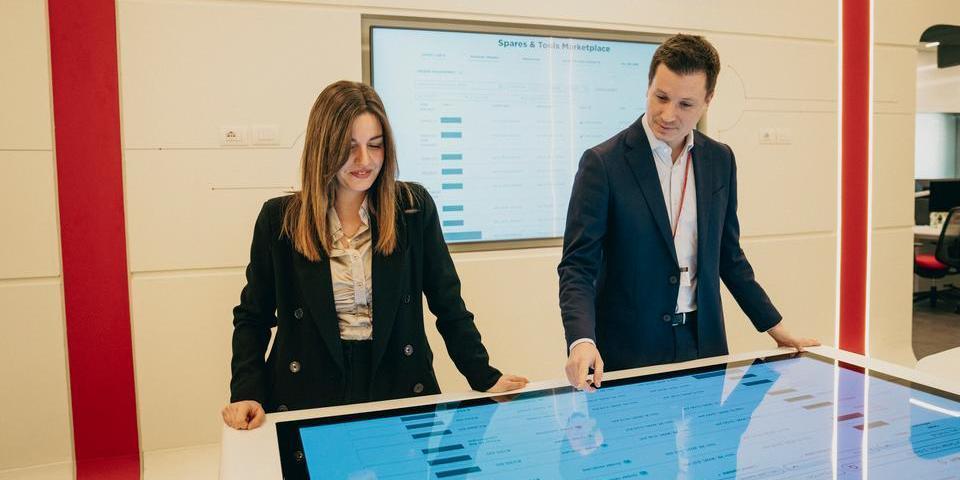
Recognising that the availability of spares is a significant priority for our operator community, we are introducing a new initiative that embodies the principles of reuse and value regeneration: a digital ‘Second-Hand Parts Marketplace’.
This innovative platform will connect the Leonardo Customer Network and create a trusted environment for customers to buy and sell spare parts directly with each other — turning circular economy into a practical, value-creating opportunity for the entire helicopter ecosystem.
The idea behind the digital marketplace project is to create an ecosystem that enables parts to be redistributed efficiently within the operator community, reducing downtime, optimising inventory levels, and potentially increasing fleet availability.
The marketplace, which will eventually be accessible directly via the Leonardo Customer Portal, will also bring important benefits in terms of sustainability and circularity. By opening a new channel to make best use of existing spares, the platform will encourage the reuse of serviceable components, helping to optimise stocks and reduce new production.
Luigi Farro, who has been overseeing development of the marketplace within our Customer Support, Services & Training team, explains the thinking behind the concept: “The idea was born from an awareness that a remarkable number of serviceable components could remain unused in customers’ stocks.
“We asked ourselves the question: how can we help to unlock the potential of these parts? By facilitating their exchange, the platform will help to maximise the usage of existing assets by allowing unused spare parts to be resold through the platform and at the same time support a more sustainable use of resources.”
The project team has been developing the digital ‘building blocks’ for the platform over the past 12 months, engaging a selected group of customers to better understand requirements for the marketplace. Meanwhile, to test how the platform operates, a pilot group of early adopters has provided input and feedback on functionality and the user experience.
Luigi Farro comments: “We’re taking a step-by-step approach ahead of a full launch in the coming months. In this initial phase, we are reaching out to the first interested early adopters to support them in creating their own shops within the marketplace.
“The next phase will be to open up the platform to our civil customers, initially in selected geographical areas, to be later extended globally. The marketplace will have its own dedicated section within the Leonardo Customer Portal, so there will be no need for a separate login or a complicated sign-up process.”
The marketplace will focus on serviceable spare parts that can be exchanged among operators while maintaining full traceability and airworthiness certification.
Leonardo Helicopters will act as enabler, creating the platform itself and ensuring that all transactions are successfully completed in the most effective way. We will not be involved in commercial aspects – which will be the direct responsibility of buyers and sellers.
“Our role is to provide the digital infrastructure, monitor platform integrity, and support the community of users with regulatory guidance,” says Luigi.
“We’re excited about what the platform will bring. As well as circularity benefits, it will create a transparent and secure sales channel within an approved digital environment. It will strengthen customer relationships by creating a collaborative environment where operators can support each other. Look out for more information in 2026.”

Visit the AW Vertical View homepage

 Media Hub



 Civil/Parapublic


